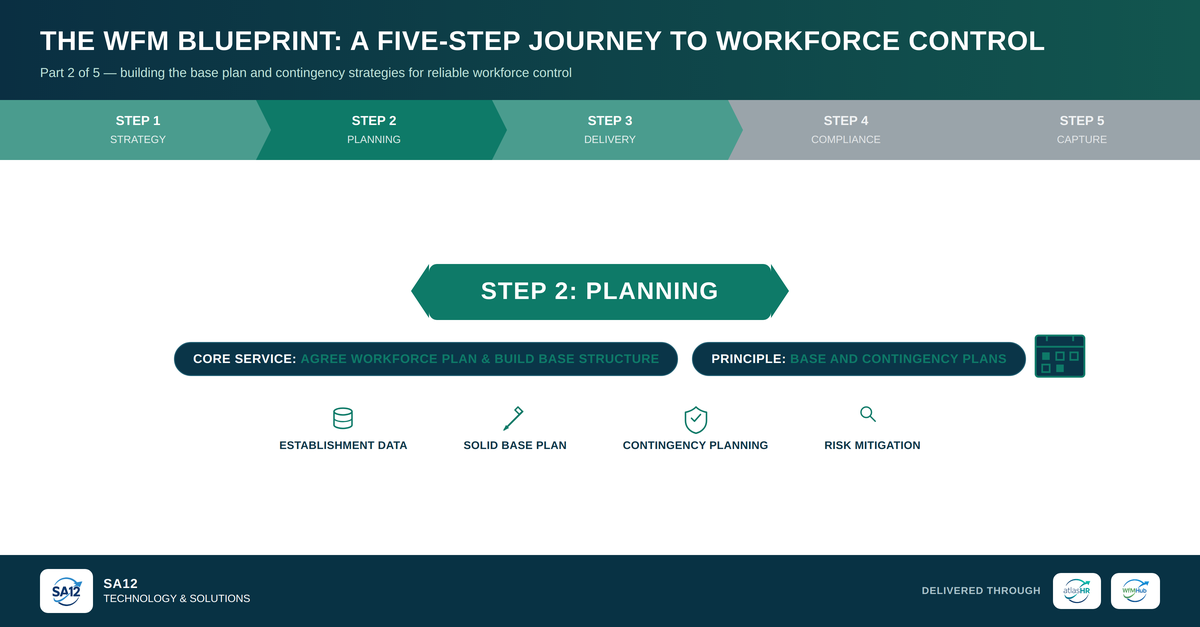
The five-step workforce management journey, the core services that deliver each step, and the principles that guide them.
We'll now walk through the second step of the journey in detail, with the rest to follow in future editions.
Step 2: Planning
Core Service: Agree Workforce Plan & Design / Build Base Structure
Principle: Builds the base plan for expected demand and resourcing and establishes contingency plans for unexpected fluctuations and unplanned events.
Establishment Data driving the Workforce Plan
- Core Data Requirement: Comprehensive and accurate establishment data constitutes an essential component of a robust Workforce Plan (WFP), serving as the foundation for critical organisational information and intelligence.
- Informing Demand and Supply: This data is instrumental in generating accurate forecasts for required resources and total hours of operational opportunity.
- Granular Team-Level Intelligence: The workforce plan must incorporate specific intelligence related to individual teams, including projected retirements, resignations, internal transfers (in/out), and any other factors impacting team composition.
- Departmental Dynamics: Furthermore, it is vital to integrate intelligence from across departments, such as data on new recruits, inter-departmental transfers, and other gains or losses relevant to specific teams.
- Workforce Availability Analysis: At this critical point, comprehensive actual data should be leveraged to generate precise availability percentages. This data should encompass factors such as sick leave, long-term absences (e.g., study, sabbaticals, parental leave), various types of holidays (including public and school holidays), and any other patterns or contingencies that influence workforce availability over a given period.
Creating a Solid Base Plan
Structuring Decisions and Forecasts
The structure must possess several essential qualities:
- Once the strategy is in place and the workforce plan has been agreed upon, the next step is to create a robust structure around the decisions and forecasts made.
- This structure serves as the framework for implementing the strategy effectively.
- A solid base plan is crucial as it outlines expected demand and resource allocation for effective management.
- The key components of a base plan include data analysis, forecasting, and resource planning to optimise efficiency.
Key Characteristics of the Structure:
- Robustness: It should withstand challenges and changes.
- Efficiency: Streamline processes and resource utilisation.
- Cost-Effectiveness: Optimise spending while achieving goals.
- Resilience: Adaptability to unforeseen circumstances.
- Realism and Practicality: Feasibility in real-world scenarios.
- Achievability: Set realistic targets.
- Alignment with Business Needs: Cater to all organisational requirements.
Best Practices
- Optimising Workforce Utilisation.
- The structure should maximise workforce potential.
- Strive for maximum efficiency and productivity.
- Utilise ALL available hours of opportunity.
Implementing best practices in developing a base plan ensures alignment with organisational goals and effective resource use. Developing Contingency Strategies
- Importance of Contingency Planning: Proactive contingency planning is vital for navigating unexpected demand fluctuations and safeguarding ongoing business operations.
- Scenario Planning: Scenario planning is a strategic process that involves outlining diverse future possibilities. This proactive approach helps organisations prepare for various outcomes, reducing ambiguity and fostering better decision-making, particularly in the face of uncertainty.
- Resource Management: Strategic resource management, which involves flexibly adjusting resources, is essential for success during periods of fluctuating demand. This encompasses preparing for contingencies such as equipment failure or emergency site relocation.
Risk Assessment and Mitigation
Identify Potential Issues: Risk assessment serves as a cornerstone of proactive organisational management, enabling a critical shift from reactive problem-solving to preventative action.
By systematically scrutinising various facets of an organisation's operations, environment, and strategic objectives, risk assessment helps pinpoint potential issues before they escalate into significant problems or crises.
This foresight is invaluable, allowing for timely and effective intervention that can save resources, minimise damage, and maintain business continuity.
Proactive Planning: Developing mitigation strategies ensures that plans are in place to address identified risks effectively, leading to better outcomes.
This also includes skills management, ensuring you have the right skills in the right place and training plans in place to update and replace these skills before they expire.
Robust Demand Management: By integrating effective risk assessment and mitigation, organisations can achieve robust demand management, significantly improving reliability and operational stability.
This, alongside comprehensive contingency strategies, ensures your business remains resilient in the face of any scenario
In the next edition of The WfM Pulse, we'll continue the journey with Step 3: Delivery. (Including Scheduling & Digital Timesheets)
About SA12 Technology & Solutions
Through atlasHR (our HR platform), WfMHub (our WfM Platform and knowledge, resource centre) and WfM UK (our advisory service), SA12 Technology & Solutions helps businesses put this framework into practice — done properly, it delivers a workforce that's efficient, cost-effective, modern and compliant, with better data, more automation, real-time insight, stronger reporting and greater protection against regulatory risk.
Our difference: we don't just hand over a framework — we do the work with you, guide you through the process, and support you every step of the way.
Want to understand how this could work in your business? get in touch with SA12 Technology & Solutions Ltd to start the conversation.
#wfm #workforcemangement #scheduling #digitaltimesheets #wfmhub #cleaningcompanies #homecare #hospitality #pubs #restaurants #fm #abs #NationalPayrollWeek #WorkforceManagement #Payroll #Automation #HRTech #WfM #WorkforceManagement #Scheduling #Homecare #Hospitality #FieldServices #Construction #ProfessionalServices #WfMHub #Cleaningcompanies #sa12 #cleaningcompanies #wfmtaster